
Hurricanes Helene and Milton
Preview of upcoming Climate Event Attribution post
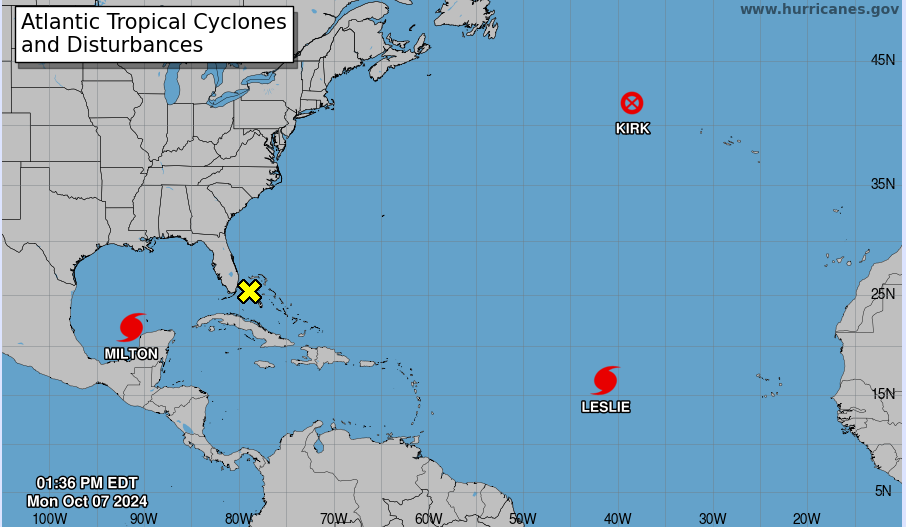
This is intended to be a preview of a much more detailed post which I will publish on 7 November, on the topic of climate event attribution. My hand has been forced, so to speak by the torrent of mis- and disinformation concerning hurricane Helene, and in anticipation of its continuation over the next few days in reaction to hurricane Milton.
Some people have said, and no doubt will say, that these storms are due to climate change. Their pronouncements tend to be inaccurate, for reasons I will outline below.
Others have said, and no doubt will continue to say, that such storms are normal and that climate change is a hoax. They are wrong on at least one count, and possibly on both.
It is a well established fact based on literally millions of scientific observations that both air and ocean temperatures are at or near their highest levels in recorded human history, and that there is a systematic increase over time of both in response to the effect of increasing greenhouse gas concentration in the atmosphere, as well as secondary effects tied back to greenhouse gas concentration increases. Higher temperatures are equivalent to higher energy levels, and in addition with higher air temperature comes an increased ability of the air to hold water. Thus on first principles we should expect that rain storms are becoming more severe both in terms of wind speeds and amounts of precipitation, on the average.
"On the average" means that those facts alone are insufficient to attribute increased wind intensity or amount of precipitation to climate change for a particular storm. For that it is necessary to perform a very intensive set of calculations followed by detailed analysis of the results. The capability to do that has only emerged gradually over the past two decades, and has required
Great advances in the accuracy and predictive detail of climate models;
Tremendous growth in computing resources, measured by both the numbers and speeds of processors in massive computer networks; and
Great increases in both the quantity and quality of climate data.
As will be discussed in the upcoming post, the foregoing advances, together with improved analytical techniques, make it possible now to ascribe differences in effects due to climate change to individual events for which sufficient data exist. One example of that was for Hurricane Harvey of 2017, for which it was possible to identify the additional flooding of Houston TX attributable to climate change. [2] But the analysis takes time, and it is unlikely that it will be possible to make a definitive statement about either Helene or Milton before the end of the year, if then, given that we do not know whether there will be sufficient data support to enable the analyses. So, in the mean time, take the statements you will see and hear on this topic with a healthy dose of salt.
Notes
I will look forward to your follow-up post. Thank you for keeping us "grounded."