
Sustainable Energy
The naysayers dissemble
N.B. This post, originally published in January 2024, has minor formatting changes, additions and corrections. It is reposted for the benefit of new free subscribers, as background for an upcoming post.
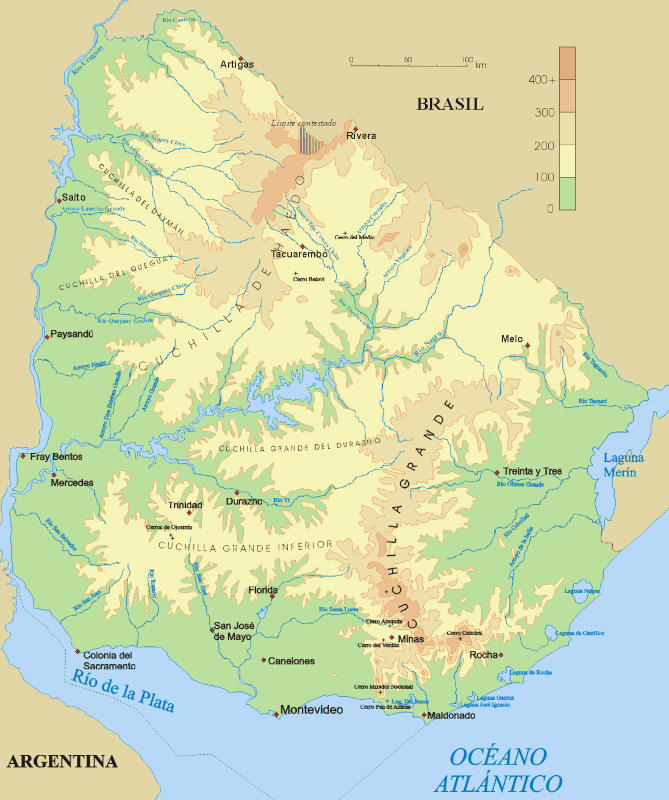
Not to dwell on it, but we all know that Substack and the media at large are almost overwhelmed by disinformation about sustainable energy. Fortunately it is possible to falsify their lies with something that they cannot refute: an example of a country that gets 98% of its energy from renewable sources and that has saved money and created jobs in the process. That country is Uruguay.
The hero of this piece is the particle physicist Ramon Méndez Galain, who tells his story in a very illuminating and optimistic TED Talk [1]. It is certainly worth watching. He was also the subject of two NPR broadcasts in the fall of 2023 [2, 3].
Basically, over a period of only two decades, Uruguay was able to evolve from being highly dependent on expensive fossil fuel and electricity imports to a state in which 98% of their energy comes from renewable, domestic resources, and becoming a net exporter of energy. The process started with Galain's publication of a proposal to wean the country off of dependence on expensive energy imports, which was read by the country's president and resulted in Galain being invited to become Uruguay's equivalent of the head of the Department of Energy.
Shortly after Galain assumed his official role there was a presidential election, and the new president invited Galain to remain in his role, and to proceed with the proviso that he achieve consensus approval for the actions to be taken by all the political parties in government. [4] Of course, it might be possible to make progress without a broad political consensus if one party controlled the legislative and executive branches for a sufficiently long time and was cohesive.
From a technical point of view, the way Uruguay achieved its near perfect sustainability was as follows:
A sophisticated control system was implemented to take meteorological, diurnal and load conditions into account to forecast and schedule the various sources within the integrated energy grid[5];
Capacities of intermittent sources such as wind and solar power were built to the point of being capable of providing all the country's peak energy needs;
Sustainable biomass (waste from processing plant material) and hydroelectric sources are engaged as necessary to largely compensate for reduced wind and solar power availability; and
Gas-fired generators are used in periods when there are shortfalls in the foregoing energy sources.
In the interest of countering disinformation it bears repeating that the transition to sustainable energy has reduced energy costs to both the government and consumers in Uruguay and has created new jobs amounting to several percent of the work force. The success of this system also exposes the falsehood of these additional items of disinformation:
Intermittent sources such as solar and wind are unpredictable, so cannot be integrated into a reliable energy grid;
To overcome intermittence it is necessary to massively deploy expensive energy storage systems, many of which are not at a mature state of development [6]
Conventional fossil fuel fired generators cannot be effectively operated except at constant power output
It may be argued that Uruguay is a small, compact country, which makes integration of its energy grid a relatively simple matter, while the US is much larger and has yet to fully integrate its grid. It is a given that the US grid needs to be modernized in any event, and we will either have to come together as a country or accept the consequences of entities like Texas not wishing to be part of the solution and proceeding without them. The US has advantages over Uruguay that facilitate achieving a high degree of sustainability. These include:
The lower 48 states span 4 time zones, which equates to three additional hours per day that the sun is above the horizon in the US as compared to Uruguay;
The lower 48 states possess four long stretches of coastline, geographically and diurnally separated, leading to lower potential variability in the supply and temporal characteristics of offshore wind power in the US as compared to Uruguay;
The US has vast underpopulated, low latitude, semi-arid areas that are ideally suited to massive employment of photovoltaic solar arrays;
The US agriculture system already produces substantial quantities of sustainable biomass fuel in the form of bagasse or stover; [7]
For the short term, the US will retain a significant capability for electricity generation from nuclear fission, although this is a mixed blessing due to the inherent instability of current reactor designs and the unsolved high level radioactive waste problem. Also,
The US has long standing control systems expertise, and is at the forefront of machine learning algorithm- and high performance computer development, assuring that we could develop and implement the necessary prediction and control software.
We need to distinguish between sustainable and carbon neutral energy sources. Biofuels, like fossil fuels, produce carbon dioxide when burned and thereby contribute to global heating. Thus for the short term it will necessary to equip the biomass and fossil fuel fired power plants with carbon capture and sequestration (CCS) capabilities. In the long term, it makes sense to do away with biomass and fossil fuels entirely, building additional wind and solar generation capacity to electrolyze water to produce hydrogen, which can be used in place of biomass or fossil fuels without the efficiency and cost penalties imposed by CCS. CCS can then be relegated to helping achieve load balancing and to reduce the CO2 concentration of the atmosphere.
There are no technological hurdles to making the US energy system sustainable, including doing away with fossil fuels entirely. What is lacking is a political system that is capable of appreciating the problem of climate change and its causes, and steering a course toward a sustainable, decarbonized future. Here in the US, there is a tendency to focus almost exclusively on the President, and by doing so neglecting the role of the legislative branch and the judiciary. The current term illustrates the danger of that. Even in the Senate, where the party of the President is in a majority, forces opposed to action on climate change have hobbled the attempts to make meaningful progress. Technical possibility can become reality only if the electorate makes it so through their support of, and votes for, candidates who understand the urgency of the climate issue and are committed to taking the actions necessary to address it as well as ensuring that appointees to key judicial positions are, if not scientifically literate, are at least not science deniers. That means, as a first step, voting Blue up and down the ticket in November.
Notes
[1] https://www.npr.org/2023/11/10/1211922036/uruguay-is-a-renewable-energy-utopia-how-did-it-get-there
[3] https://www.npr.org/2023/10/06/1197954251/uruguay-green-energy-carbon-emissions-climate-change
[4] Uruguay is a presidential republic with a two chamber legislative branch. Currently the lower house is dominated by four parties, with four possible combinations to form a majority. https://en.wikipedia.org/wiki/List_of_political_parties_in_Uruguay There are also three parties having a single representative seated in the 99-seat lower house. Suffrage is universal and compulsory. Of the five western hemisphere countries rated as democracies by such organizations as The Economist, Uruguay ranks at the top (and 11th worldwide) just ahead of Canada; the US ranks 5th of 5, and 30th worldwide. https://ourworldindata.org/grapher/democracy-index-eiu?tab=table
[5] When demand and supply can be accurately forecasted, there is little need for ancillary measures such as energy storage. In fact, the Uruguay energy grid does not rely on batteries or pumped water to maintain a reliable energy supply. This is an important and generally overlooked benefit of having all sources and sinks effectively interconnected.
[6] Not to belabor the point, but the current practice in the US of building massive battery farms populated with lithium batteries is going to lead to disaster, particularly if our current practice of not recycling lithium continues. Some uninformed climate advocates mistakenly hail the massive deployment of lithium battery farms in places like California as being somehow demonstative of clean sustainable energy, but they are at best half right. If you have the ear of the Bill McKibbens of the world, kindly clue them in: one does not need to waste precious lithium in a fixed battery farm. There are many other battery technologies available or coming on line that can do the job when weight is not an issue. See, for example https://physics.aps.org/articles/v17/73
[7] Here I follow the Uruguayan example of listing only waste products as potential sustainable biofuels. This excludes crops such as rapeseed that are grown for biofuel, on land that could otherwise be used to produce food or be rewilded to sequester carbon and restore wildlife.